
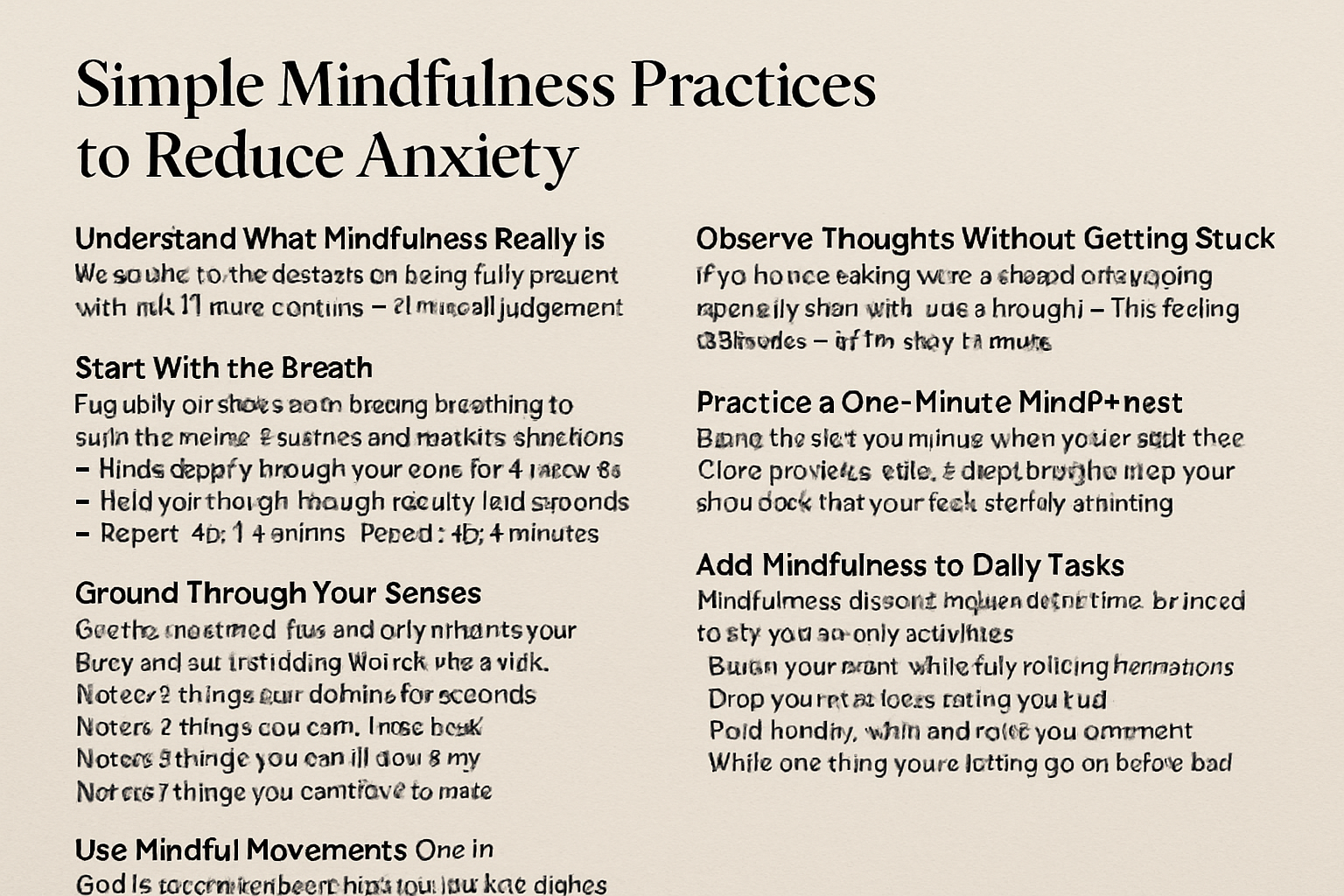
Simple Mindfulness Practices to Reduce Anxiety
Anxiety often thrives on overthinking, future worries, and racing thoughts. It pulls you away from the present moment and into a state of tension. Mindfulness is one of the most effective and natural ways to bring yourself back — back to your breath, back to your body, back to now. And the best part is, mindfulness doesn’t require hours of meditation or a perfect environment. It’s about small moments of awareness, practiced consistently, that help you feel calmer, more grounded, and in control.
Understand What Mindfulness Really Is
Mindfulness is the practice of being fully present with what’s happening right now — in your body, mind, and environment — without judgment. It’s not about clearing your mind or becoming perfectly calm. It’s about noticing your thoughts and feelings, then choosing not to get carried away by them.
When you’re mindful, you observe your anxiety instead of becoming it. You notice the tension without letting it take over. This shift creates space to respond instead of react.
Start With the Breath
One of the simplest and fastest ways to reduce anxiety is to focus on your breathing. Deep, slow breathing helps calm the nervous system and regulate emotions.
Try this:
Inhale deeply through your nose for 4 seconds
Hold your breath for 2 seconds
Exhale slowly through your mouth for 6 seconds
Repeat for 1–2 minutes
Each breath is a reset. You don’t need to “fix” anything — just keep breathing.
Ground Through Your Senses
When anxiety pulls you into your head, use your five senses to return to your body and surroundings.
Try this grounding technique:
Notice 5 things you can see
Notice 4 things you can touch
Notice 3 things you can hear
Notice 2 things you can smell
Notice 1 thing you can taste
This practice interrupts anxious thoughts and brings you fully into the moment.
Use Mindful Movements
You don’t need to sit still to be mindful. Gentle movement like walking, stretching, or even washing dishes can become a mindfulness practice.
Try this during a walk:
Feel your feet on the ground
Notice the rhythm of your steps
Pay attention to the wind or sun on your skin
Observe without rushing or judging
Let your body anchor your awareness. Let each motion bring you back to the now.
Observe Thoughts Without Getting Stuck
Mindfulness teaches you to watch your thoughts as if they’re clouds drifting across the sky — temporary and passing.
The next time anxious thoughts appear, instead of resisting them, try saying:
That’s just a thought.
This feeling is allowed.
It’s okay to pause.
You don’t need to believe every thought your brain sends. You can simply observe and let it pass.
Practice a One-Minute Mindful Reset
If you feel anxiety rising in the middle of your day, pause for just one minute. Close your eyes. Take 3 deep breaths. Drop your shoulders. Feel your feet. Say silently: “I am safe in this moment.”
This one-minute reset can calm your mind and prevent spiraling.
Add Mindfulness to Daily Tasks
Mindfulness doesn’t require extra time — you can add it to what you’re already doing.
Try this:
Brush your teeth while fully noticing the motions and sensations
Drink your tea slowly, tasting each sip
Fold laundry while focusing only on the texture and movement
Let everyday moments become opportunities for stillness.
Journal With Awareness
Writing can be a powerful mindfulness tool, especially when anxiety feels loud. Set a timer for 5–10 minutes and let your thoughts flow onto paper — no structure, no pressure.
You can also try prompts like:
What is my body telling me right now?
What do I need most in this moment?
What am I grateful for today?
This helps process emotions and reconnect with yourself.
Create a Mindful Evening Ritual
Winding down with intention reduces nighttime anxiety and improves sleep. Choose 1–2 calming habits to do each evening without distractions.
Examples:
Light a candle and breathe deeply for 5 minutes
Stretch slowly with soft music
Reflect on one thing you’re proud of from your day
Write one thing you’re letting go of before bed
Let your body and mind know it’s safe to rest.
Final Thought: Mindfulness Is Always Available
You don’t need a quiet room or perfect mood to practice mindfulness. All you need is willingness — to pause, to breathe, to return to yourself.
Anxiety pulls you away from now. Mindfulness gently brings you back.
And with each return, you grow stronger, steadier, and more in tune with your own calm.