
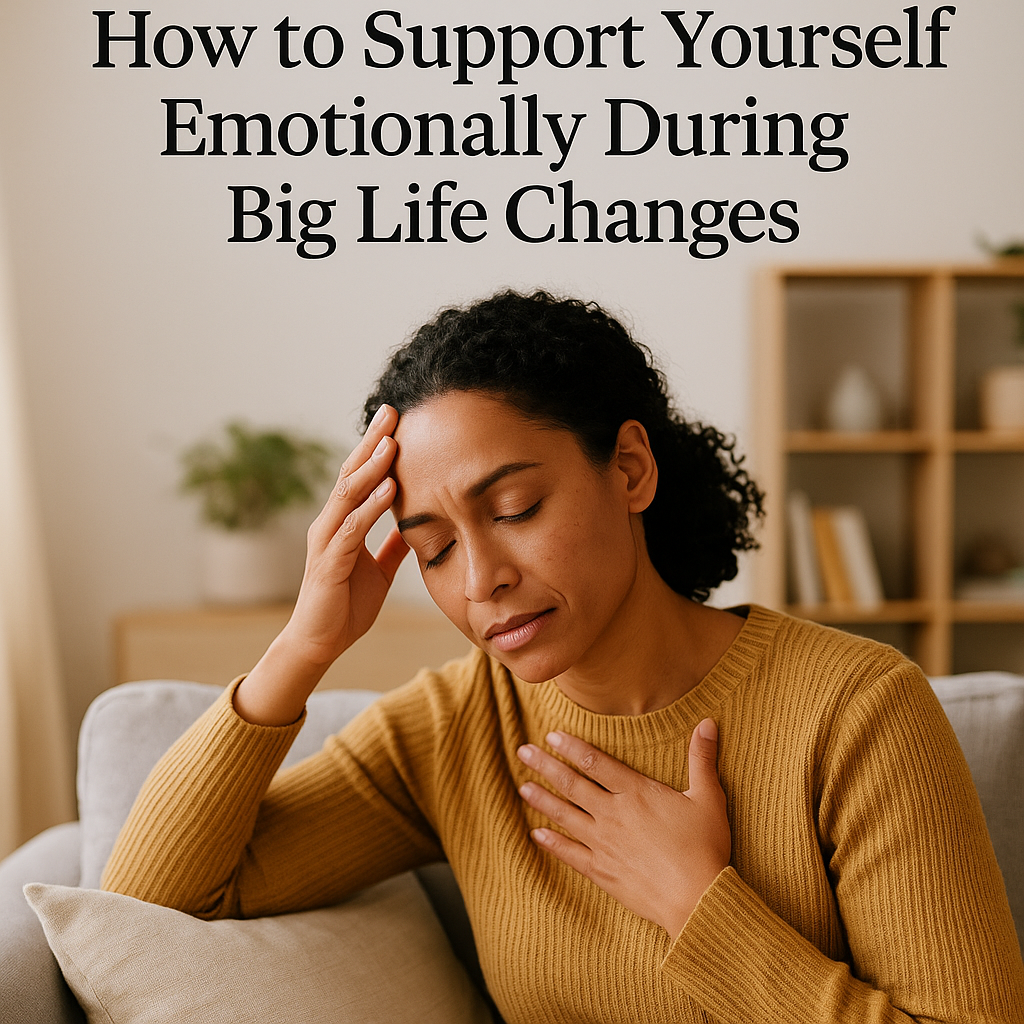
Big life changes — whether planned or unexpected — can shake your sense of stability. Moving to a new place, starting or ending a relationship, changing careers, becoming a parent, dealing with loss, or going through a personal transformation… even positive changes can bring emotional turbulence.
In these moments, it’s easy to feel overwhelmed, disconnected, or emotionally stretched. But you don’t have to navigate these shifts on autopilot. You can support yourself with intentional care, grounding practices, and compassion.
Here’s how to stay emotionally supported and centered during big life changes.
Acknowledge That Change Is Stressful — Even When It’s Good
Even welcome changes disrupt your routines, identity, and expectations. Stress doesn’t mean something is wrong — it means something is shifting.
Instead of brushing off your emotions, name them:
- “This is exciting, but it’s also scary.”
- “I feel uncertain and hopeful at the same time.”
- “I’m grieving what I’m leaving behind, even if I know it’s right.”
Let your feelings exist without needing them to be logical or tidy.
Slow Down When You Can
Change often brings urgency — deadlines, decisions, demands. But your emotional system needs time to catch up.
Practice slowing down by:
- Taking intentional pauses between tasks
- Breathing deeply before reacting
- Creating short moments of stillness each day
- Letting go of the need to “have it all figured out”
Slowing down isn’t weakness. It’s how you stay connected to yourself.
Create Anchors of Stability
When your outer world is shifting, create inner anchors — routines, rituals, and practices that stay steady.
Try:
- A morning check-in with your breath or journal
- A consistent bedtime routine
- A daily walk, tea ritual, or stretch session
- Eating nourishing meals at regular times
These small rhythms help remind your body: I am still safe. I am still supported.
Give Yourself Permission to Feel Everything
Change brings up complex emotions — excitement, fear, sadness, confusion, doubt. You don’t need to sort them out immediately. You just need to feel them.
Try:
- Journaling without judgment
- Naming your emotions out loud
- Letting yourself cry, sigh, or express without fixing
- Reminding yourself: “This is part of the process.”
Emotional honesty leads to emotional freedom.
Limit Overload (Even From Well-Meaning People)
During major transitions, everyone has opinions. Advice, questions, expectations — it can be overwhelming.
It’s okay to:
- Set boundaries around what you share and when
- Take space from certain conversations
- Tell people, “I’m still processing — I’ll share when I’m ready.”
- Unfollow or mute anything that makes you feel “behind”
Protect your energy. Not everyone needs access to your process.
Ask for Support — and Receive It
You don’t have to do everything alone. Change is easier to navigate when you feel emotionally held — by people, community, or even professionals.
Support might look like:
- Talking with a friend who listens without fixing
- Seeing a therapist or coach
- Letting someone help with small tasks
- Being around people who ground and calm you
Asking for help is a strength, not a weakness.
Reflect on What This Change Is Teaching You
Big changes often trigger personal growth — even if you don’t see it right away. With time, you’ll understand what this shift was asking you to learn.
Ask yourself:
- What values are becoming clearer to me?
- What parts of myself am I discovering or reclaiming?
- How have I shown strength in this transition?
Even when it feels messy, you are evolving.
Final Thought: You Can Be in Transition and Still Be Whole
You don’t need to have every answer. You don’t need to rush into certainty.
You are allowed to be in between — and still be complete.
Support yourself the way you’d support a friend: with softness, patience, and deep trust.
Because this chapter matters. And you’re doing better than you think.