
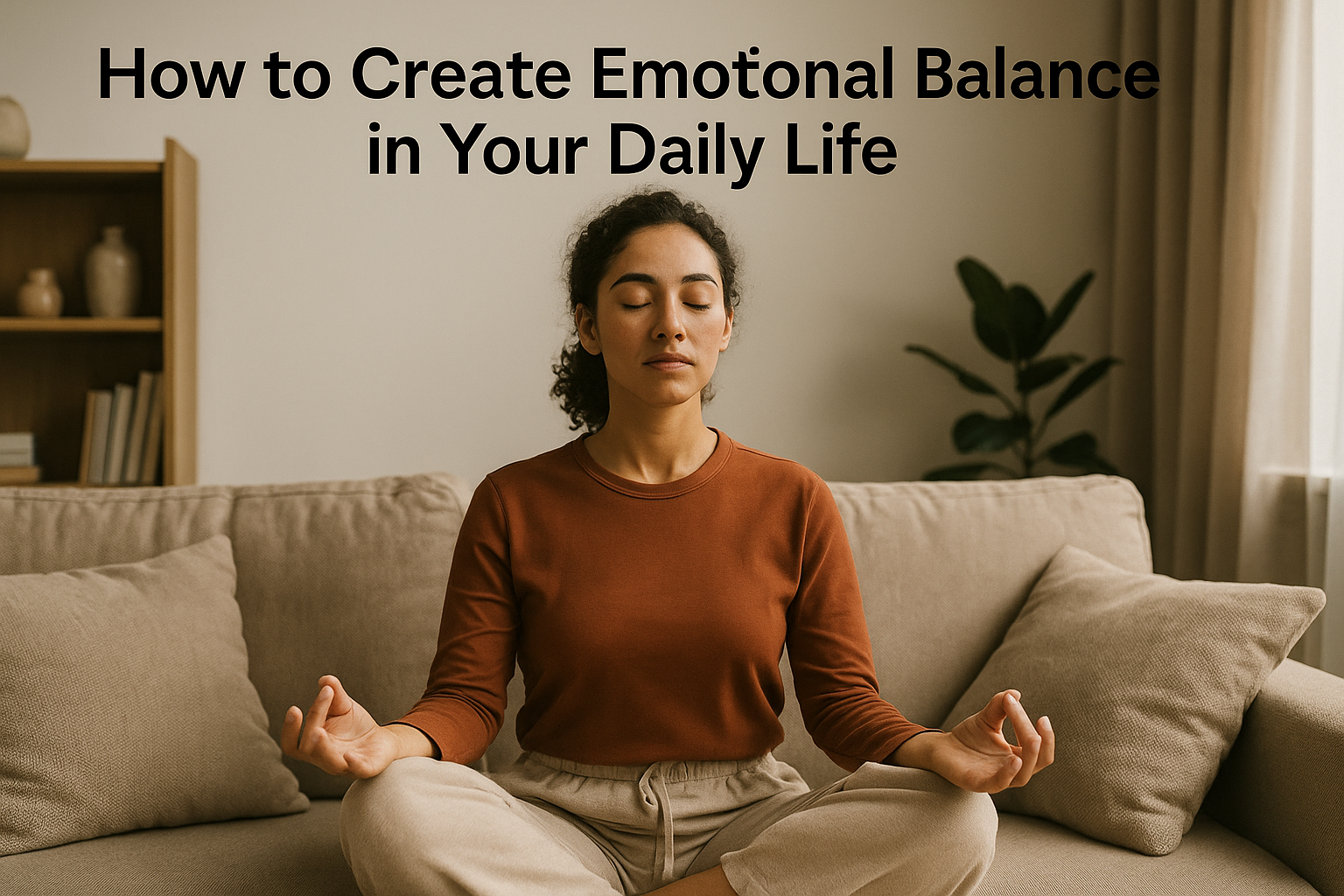
Emotional balance doesn’t mean feeling happy all the time or avoiding negative emotions. It means being able to navigate your feelings with awareness, stay grounded through ups and downs, and return to a state of calm after stress or overwhelm.
When you’re emotionally balanced, your thoughts feel clearer, your reactions feel more intentional, and your relationships become more stable. The good news is that you don’t need a perfect life or endless free time to build emotional balance — you just need simple, consistent practices.
Here’s how to create emotional balance in your everyday life.
Acknowledge Your Emotions Without Judging Them
Emotions are not problems to fix — they’re signals to understand. When you suppress or judge what you feel, you create more internal tension. Emotional balance begins with allowing your feelings to exist.
Practice saying:
I feel this, and that’s okay.
This emotion is valid, even if it’s uncomfortable.
I can feel this without becoming it.
Permission to feel is the first step toward peace.
Check In With Yourself Daily
Most of us check our phones more often than we check in with our own minds. Building a habit of emotional self-awareness helps you notice when you’re off-balance — before it becomes overwhelming.
Try this quick check-in:
How am I feeling in this moment?
What triggered this feeling?
What do I need right now?
A one-minute pause of honesty can shift your entire day.
Start and End Your Day With Intention
How you begin and end your day sets the emotional tone. Instead of rushing into stress or collapsing into sleep, create small rituals that offer grounding.
Morning ideas:
Take three deep breaths before checking your phone
Stretch while setting an intention
Repeat a calming affirmation
Evening ideas:
Write down one thing you’re grateful for
Dim the lights and do a slow body scan
Unplug from screens 30 minutes before bed
These moments help you reset emotionally — no matter how your day went.
Move Your Body to Release Stuck Energy
Your emotions live in your body — not just your mind. Movement helps release built-up stress, anxiety, or restlessness.
Try:
A brisk walk to clear your head
Stretching while focusing on your breath
Dancing to a favorite song
Gentle yoga to regulate your nervous system
Even five minutes of conscious movement can shift your emotional state.
Set Boundaries That Protect Your Energy
Emotional balance isn’t possible when you’re constantly overextended. Boundaries are not walls — they’re guides for where your energy goes.
Ask yourself:
What drains me consistently?
Where do I need more space or time for myself?
What boundary would help me feel more grounded?
Then start small — one honest “no” is a powerful act of emotional self-care.
Limit Overstimulation
We live in a noisy world — full of alerts, news, opinions, and endless scrolling. Constant stimulation can heighten anxiety and emotional reactivity.
Create space for stillness by:
Turning off notifications for part of your day
Spending 10 minutes outdoors without your phone
Having one screen-free hour before bed
Listening to calming sounds instead of talking or music
Silence allows you to hear what you’re really feeling — and what you truly need.
Use Breath as a Reset Button
Your breath is always available — and it’s one of the fastest ways to return to emotional balance. Slow, intentional breathing helps calm your nervous system and bring clarity.
Try box breathing:
Inhale for 4 seconds
Hold for 4 seconds
Exhale for 4 seconds
Hold for 4 seconds
Repeat for a few rounds
Let your breath become your anchor — especially in moments of stress.
Journal to Process, Reflect, and Release
Writing helps untangle emotions, clarify thoughts, and process experiences. You don’t need to be a writer — just be real.
Prompts to explore:
What emotion is asking for my attention today?
What’s been weighing on me emotionally?
What would bring me peace right now?
Journaling gives your inner world space to breathe.
Connect With People Who Bring Calm
Emotional balance is easier when you’re surrounded by people who respect your energy and support your well-being. Seek out calm, honest, grounded relationships — and limit exposure to drama, chaos, or emotional manipulation.
Connection doesn’t have to be deep all the time. A kind smile, a quiet coffee chat, or a walk with a friend can restore emotional harmony.
Final Thought: Emotional Balance Is Built in the Small Moments
You don’t need to be perfect. You don’t need to feel calm all the time. You just need to keep choosing yourself — breath by breath, boundary by boundary, pause by pause.
Emotional balance isn’t something you achieve once. It’s something you practice every day. And every time you listen, rest, move, or feel with intention — you’re creating more space for peace inside of you.