
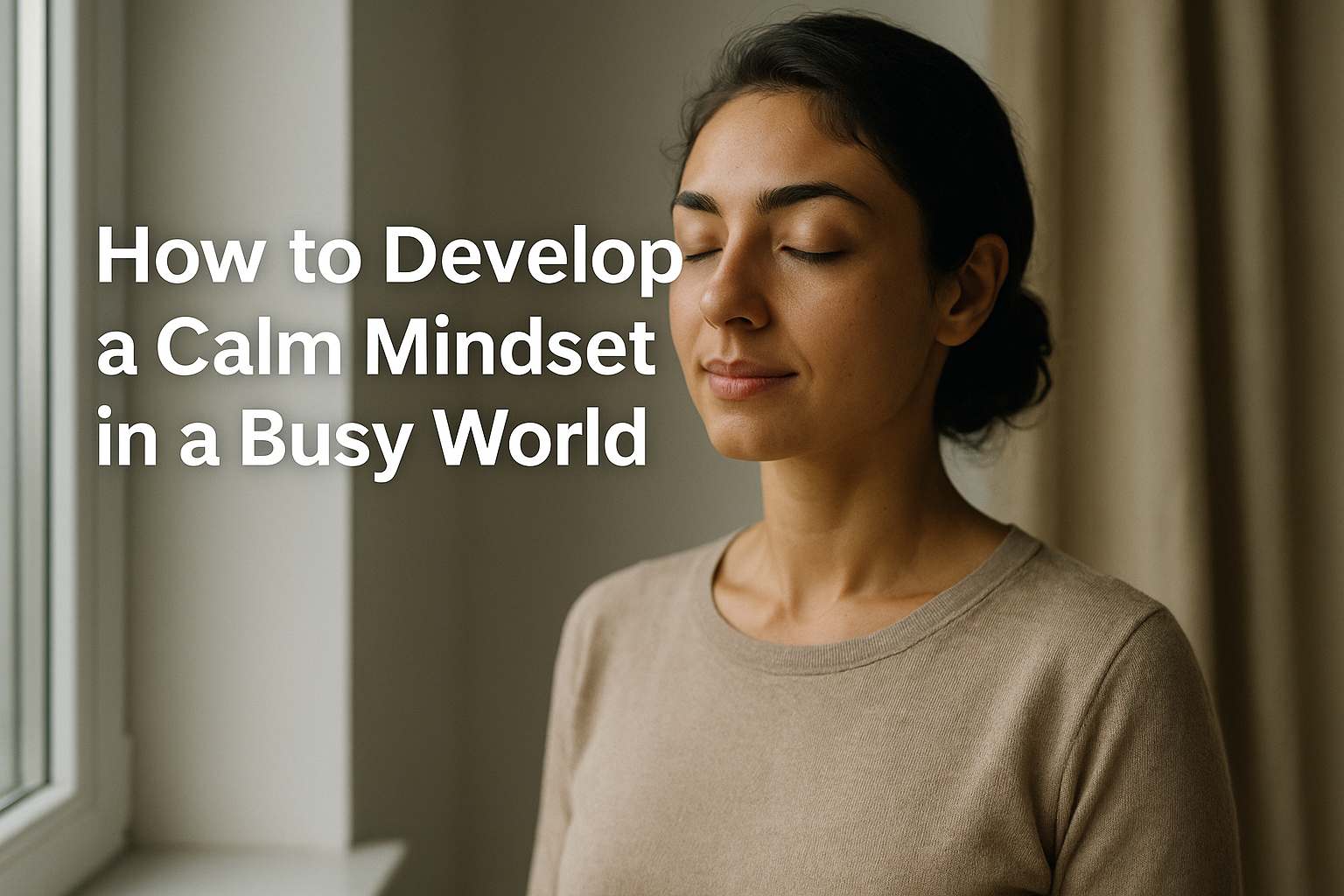
In a world that moves fast, where expectations are high and noise is constant, finding calm can feel like a luxury. But calm isn’t something you have to wait for — it’s something you can learn to cultivate from within. A calm mindset doesn’t mean nothing ever stresses you. It means you develop tools and habits that help you stay centered even when life gets chaotic.
Here’s how to build and maintain a calm mindset — even when the world around you feels anything but calm.
Understand What Calm Really Means
Calm isn’t the absence of stress — it’s the ability to return to center. It’s the inner knowing that says, “I can handle this,” even when you don’t have all the answers.
A calm mindset helps you:
- Respond instead of react
- Stay focused under pressure
- Reduce anxiety and overwhelm
- Feel more in control of your energy
- Think clearly, even during conflict
This isn’t about perfection — it’s about creating a safe place inside yourself.
Start Your Day With Intention, Not Input
What you do in the first 10–30 minutes of your day sets the tone for everything that follows. Avoid jumping straight into emails, social media, or news.
Instead, try:
- Deep breathing or a grounding exercise
- Writing an intention for the day: “Today I choose calm.”
- A slow stretch or movement routine
- A quiet breakfast without distractions
Start calm — and you’re more likely to stay calm.
Practice Breath Awareness Throughout the Day
Your breath is your built-in reset button. When your thoughts feel fast, your body tense, or your mood reactive, come back to your breath.
Try this anytime:
- Inhale slowly through your nose for 4 seconds
- Hold for 2 seconds
- Exhale through your mouth for 6 seconds
- Repeat for a few rounds
Let your breath lead you back to the present moment.
Reduce Sensory Overload
A cluttered environment, loud spaces, or too many screens can overstimulate your nervous system and make calm harder to access.
Simplify your space and routine by:
- Turning off unnecessary notifications
- Creating quiet, screen-free blocks of time
- Decluttering the area where you spend most of your time
- Using soft lighting and calming colors
Your environment can either support or sabotage your inner peace.
Focus on One Task at a Time
Multitasking may feel efficient, but it actually scatters your focus and increases mental stress. A calm mindset thrives on presence.
Practice:
- Doing one thing at a time — even for 10 minutes
- Putting your phone in another room while working
- Taking small breaks between tasks to reset
- Using a timer to stay focused in short bursts
Give your mind space to breathe between demands.
Speak to Yourself Gently
Your inner voice can either calm you or create chaos. When something goes wrong or anxiety creeps in, choose supportive self-talk.
Try saying:
- “I don’t have to figure everything out right now.”
- “This is temporary. I’ve gotten through hard moments before.”
- “It’s okay to pause. I can return to this when I feel ready.”
- “I choose calm over chaos.”
Be the safe voice in your own mind.
Limit Your Exposure to Stress Triggers
You can’t avoid all stress, but you can reduce unnecessary stress. That includes emotional, digital, and energetic clutter.
Protect your peace by:
- Limiting consumption of the news or emotionally charged content
- Setting boundaries with toxic conversations or people
- Taking social media breaks or unfollowing accounts that spike anxiety
- Saying “no” to things that don’t align with your energy
Your calm is worth guarding.
Create a Wind-Down Ritual
The way you end your day is just as important as how you begin. Instead of collapsing into bed after a hectic day, create a ritual that helps your mind and body transition into rest.
Ideas include:
- A warm shower or bath
- Light stretching or yoga
- Journaling or listing what you’re grateful for
- Reading or listening to calming music
- Deep breathing in bed before sleep
These small rituals tell your system: it’s safe to relax now.
Final Thought: Calm Is Something You Create
You don’t need a perfect schedule, quiet house, or ideal conditions to find calm. You just need intention. You need small, steady choices that return you to yourself.
Calm is a skill. A habit. A decision.
And the more you practice it — the more it becomes your natural state.