
When things go wrong, when you make a mistake, or when life feels heavy, your first instinct might be to criticize yourself. Many of us have learned to be our own harshest judge — believing that shame or pressure will push us to do better. But what actually helps us grow, heal, and move forward is something softer: self-compassion.
Self-compassion is the practice of treating yourself with the same kindness, understanding, and patience you would offer a friend. It’s not about letting yourself off the hook — it’s about creating space for real, lasting emotional resilience.
Here’s how to practice self-compassion, especially when you need it the most.
Notice Your Inner Voice
When something goes wrong, pay attention to the way you talk to yourself. Are your thoughts kind or cruel? Encouraging or punishing?
Common self-critical thoughts include:
- “Why can’t I just get it right?”
- “I always mess things up.”
- “I shouldn’t feel like this.”
Now imagine a loved one came to you with the same struggle. Would you say those things to them? Probably not. Self-compassion begins with awareness — and the decision to speak to yourself differently.
Acknowledge What You’re Feeling Without Judgment
You’re allowed to be disappointed, frustrated, or sad. Difficult emotions are not wrong — they’re human.
Try saying:
- “This is really hard for me right now.”
- “I feel overwhelmed, and that’s okay.”
- “I’m hurting, but I’m here for myself.”
Naming the emotion with gentleness gives it less power. It also helps you respond instead of react.
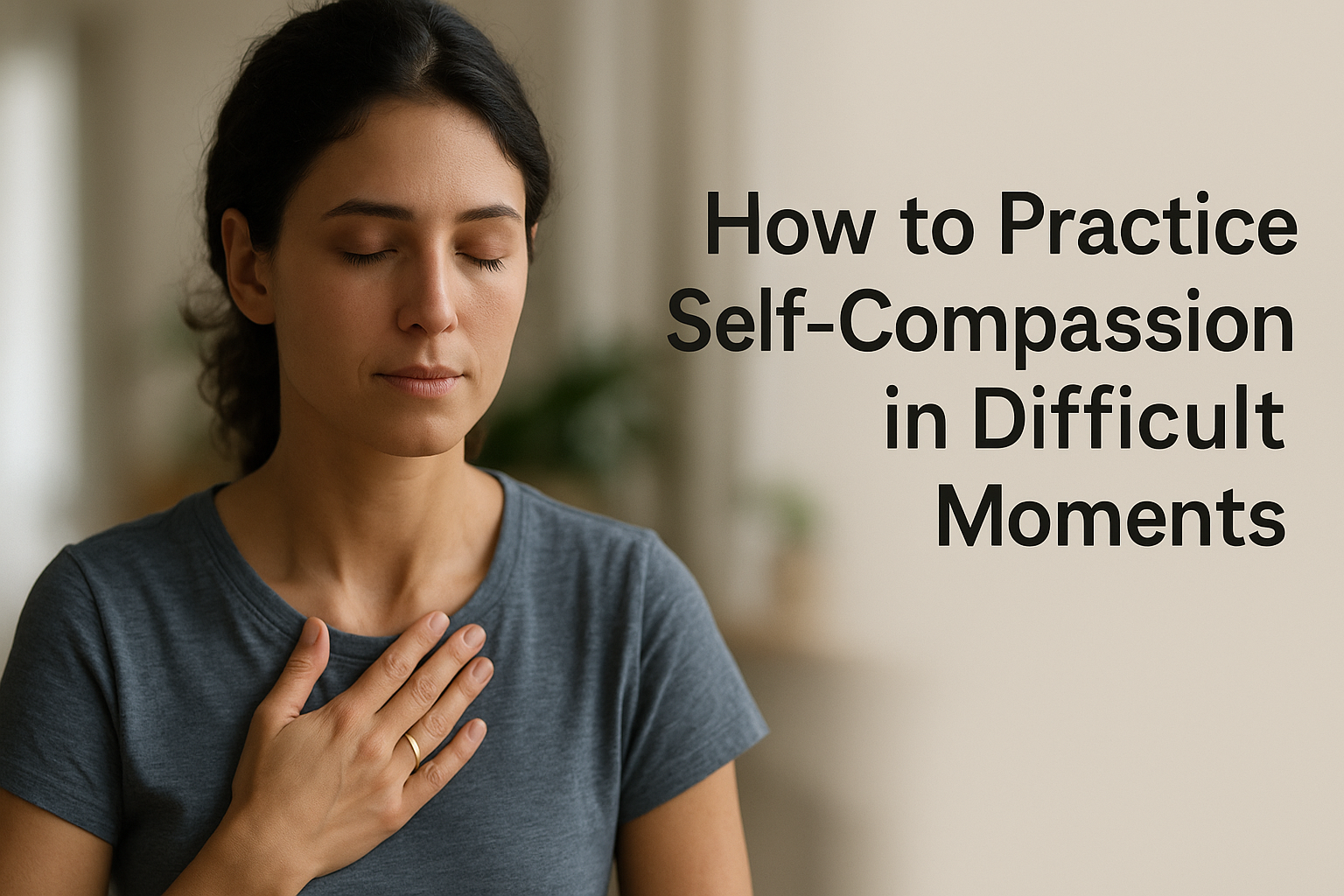
Place a Hand on Your Heart or Body
Physical touch can be incredibly grounding. When emotions are intense, your body needs reassurance too.
Try this:
- Place your hand on your chest or hug your arms around your body
- Breathe slowly and say, “I’m safe. I’ve got myself.”
- Let yourself feel held, even for a few moments
This activates the nervous system’s calming response and reminds you: you’re not alone, even within yourself.
Use Supportive Language
Self-compassion isn’t just about stopping negative self-talk — it’s about replacing it with something healing. Practice saying things like:
- “I’m doing the best I can with what I know.”
- “It’s okay to struggle — everyone does.”
- “I can learn from this without shaming myself.”
- “I’m still worthy of love, even when I fall short.”
Speak to yourself the way someone who truly loves you would.
Let Go of the Need to Be Perfect
Perfection is an impossible standard. When you aim for it, you set yourself up for constant stress, self-blame, and burnout.
Self-compassion invites you to try, fail, learn, and try again — all without losing your sense of worth.
Instead of asking, “Did I do it perfectly?” ask:
- “Did I show up with intention?”
- “Did I stay true to my values?”
- “What can I carry forward from this experience?”
Growth doesn’t require perfection — it requires patience.
Take a Break Without Guilt
When things feel overwhelming, one of the most compassionate things you can do is pause. Rest. Step away. That doesn’t mean you’re avoiding life — it means you’re tending to your inner world first.
Try:
- A short walk to release tension
- Lying down with your eyes closed and breathing slowly
- Doing something soothing like making tea or taking a warm shower
- Turning off your phone and creating space to just be
Rest is not earned. It’s essential.
Reflect With Curiosity, Not Criticism
After a difficult moment, instead of spiraling into “What’s wrong with me?”, try asking:
- “What was I feeling that led to that reaction?”
- “What did I need in that moment?”
- “What can I learn from this for next time?”
Curiosity invites growth. Criticism only reinforces shame.
Surround Yourself With Self-Compassion Reminders
Sometimes it’s hard to be compassionate when your mind is loud or your emotions are raw. Having small reminders in your space can help anchor you.
Ideas:
- Write a compassionate mantra and stick it on your mirror
- Save a note on your phone with words that comfort you
- Follow creators or authors who speak with emotional depth and gentleness
- Use calming visuals, scents, or music to soothe your environment
Create a world that reflects how you want to feel inside.
Final Thought: You Deserve Your Own Kindness
You won’t always get it right. You’ll have moments of anger, regret, or grief. That’s not weakness — that’s life.
But in every difficult moment, you have a choice. You can turn against yourself — or you can turn toward yourself with care.
Self-compassion won’t make your pain disappear. But it will make your heart stronger, your mind steadier, and your path more peaceful.
So the next time things feel heavy, remember:
You don’t have to be perfect. You just have to be present.
And you are allowed to meet yourself with love.