
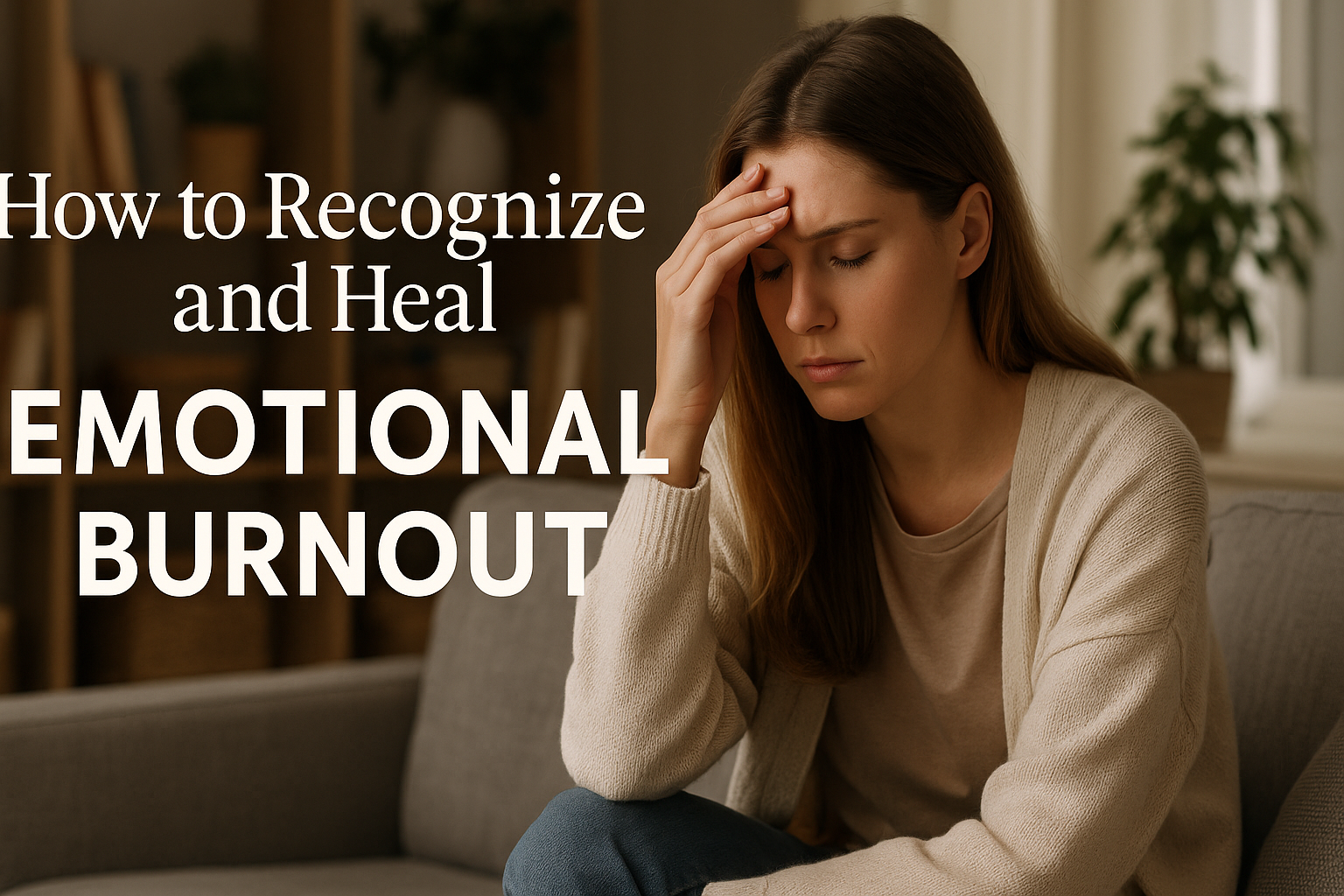
Emotional burnout doesn’t always look like exhaustion or overwhelm. Sometimes it shows up as numbness, irritability, a lack of motivation, or the feeling that you’ve lost connection with yourself. You may not feel physically tired — but emotionally, you’re depleted.
Whether it’s from work, caregiving, relationships, or chronic stress, emotional burnout can sneak up on you. And when left unaddressed, it can affect your mental health, your ability to show up for others, and your relationship with yourself.
The good news? Emotional burnout is not permanent. With awareness, compassion, and intentional care, you can recover — and rebuild your sense of emotional vitality.
What Is Emotional Burnout?
Emotional burnout is a state of deep emotional fatigue caused by prolonged stress, emotional labor, or unprocessed feelings. It often stems from constantly showing up for others, suppressing your own needs, or trying to function while emotionally overloaded.
Common causes include:
- High-stress work environments
- Caregiver responsibilities
- Chronic people-pleasing
- Lack of boundaries
- Suppressing emotions to “keep going”
Emotional burnout isn’t a personal failure — it’s a signal that your nervous system is over capacity.
Signs You Might Be Emotionally Burned Out
You don’t have to wait until you hit a breaking point. Burnout often whispers before it screams.
Look for these signs:
- Feeling numb, detached, or emotionally flat
- Constant irritability or impatience
- Trouble focusing or feeling motivated
- Withdrawing from people or things you used to enjoy
- Feeling like small tasks are overwhelming
- A sense of dread, hopelessness, or emotional heaviness
- Sleep disruptions or chronic fatigue
- Feeling like you’re “on edge” all the time
If these feel familiar, your emotional system may be asking for rest, support, and repair.
Step 1: Acknowledge What You’re Carrying
Burnout thrives in silence. The first step in healing is honestly naming what’s happening.
Try journaling or saying out loud:
- “I’m emotionally exhausted.”
- “I feel disconnected from myself.”
- “I’ve been running on empty.”
This creates space for healing to begin. You stop pretending — and start listening.
Step 2: Validate That Your Feelings Are Real
You don’t need to “have it worse” to deserve care. You don’t need to justify your burnout with productivity, trauma, or comparison.
What you’re feeling is real. And it matters.
Tell yourself:
- “I’m allowed to feel depleted.”
- “It’s okay that I need rest.”
- “This doesn’t make me weak — it means I’m human.”
Validation is the foundation of recovery.
Step 3: Release the Pressure to Perform
One of the hardest parts of burnout is feeling like you still have to keep going, showing up, performing.
Give yourself permission to:
- Cancel non-essential plans
- Do the bare minimum at work or at home
- Say no to new commitments
- Ask for help — even if it feels uncomfortable
You don’t need to be productive to be worthy of care.
Step 4: Create Micro-Rest Moments
Burnout recovery doesn’t require a vacation — it starts with small moments of rest that add up.
Try:
- Closing your eyes and breathing deeply for 2 minutes
- Taking a short walk without your phone
- Sitting in silence with a warm drink
- Lying down during the day without sleeping — just resting
These tiny pauses help reset your nervous system and remind your body that it’s safe to relax.
Step 5: Reconnect With What Feels Nourishing
Burnout creates disconnection. One way to begin healing is to slowly return to the things that nourish, not drain, your spirit.
You might try:
- Gentle movement like stretching or yoga
- Creative expression (drawing, music, journaling)
- Being in nature or sitting by a window
- Rewatching a comforting movie or reading a favorite book
- Spending quiet time with someone you trust
Let yourself receive without pressure to give.
Step 6: Set or Reinforce Emotional Boundaries
If you’re burned out, chances are your emotional boundaries have been stretched too thin. Take time to reflect:
- Who or what has been demanding too much of me?
- What do I need to protect my peace right now?
- Where can I say “no” more clearly and kindly?
You are allowed to take up space. You are allowed to stop overextending.
Step 7: Don’t Rush the Process
Burnout recovery takes time. There’s no quick fix — but there is steady healing.
You may still feel tired after resting. You may cry unexpectedly. You may need more time alone than usual. That doesn’t mean you’re going backward. It means your body and heart are repairing themselves.
Honor your pace. Healing happens in layers.
Final Thought: You Can Come Back to Yourself
Emotional burnout can feel like losing touch with who you are. But underneath the exhaustion, you are still there — whole, worthy, and capable of healing.
Let your recovery be soft. Let it be slow. Let it be sacred.
Because your emotions matter. Your energy matters.
And you are allowed to return to yourself — not just when everything is fixed, but exactly as you are right now.