
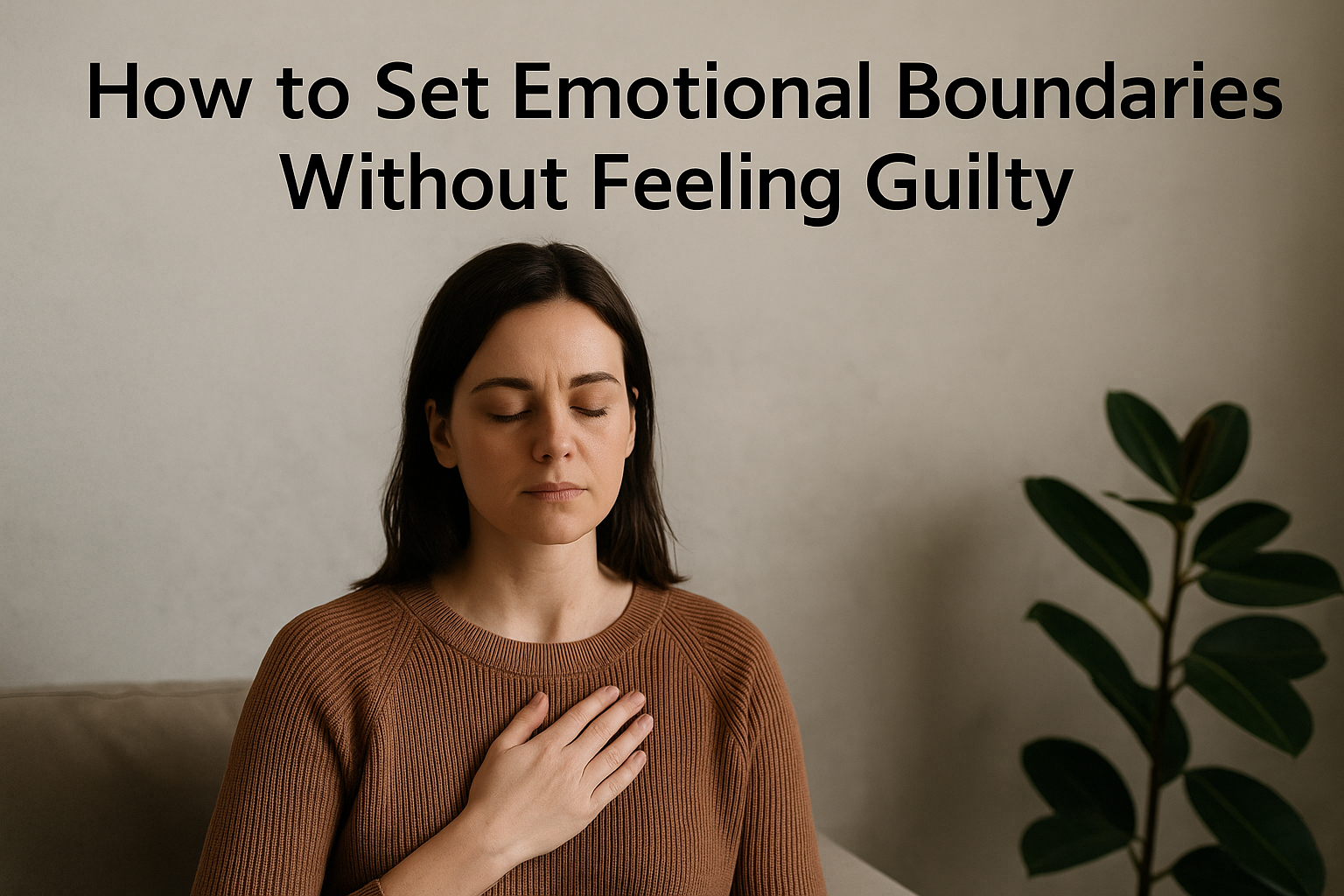
Setting emotional boundaries is one of the most powerful ways to protect your well-being — and one of the hardest. If you’re used to people-pleasing, over-giving, or being the “strong one,” drawing the line can feel like you’re doing something wrong.
But emotional boundaries aren’t walls — they’re bridges. They allow for connection while preserving your energy, clarity, and sense of self. And the more you practice setting boundaries, the more natural and empowering it becomes.
Here’s how to set emotional boundaries clearly and compassionately — without guilt.
Understand What Emotional Boundaries Are
Emotional boundaries are the invisible limits that protect your heart, your time, and your energy. They define what is okay and what is not okay in your emotional life.
Healthy emotional boundaries:
- Help you protect your peace
- Reduce resentment and emotional exhaustion
- Support honest communication
- Allow you to stay grounded in your values
- Teach others how to treat you
You can be kind and have boundaries. You can be loving and still say no.
Recognize Where Boundaries Are Needed
Emotional boundaries are often most needed in situations where you:
- Feel drained after interactions
- Frequently say “yes” when you want to say “no”
- Take on other people’s emotions as your own
- Feel guilty when putting your needs first
- Notice resentment building up
Start by reflecting:
- Where am I feeling emotionally overwhelmed?
- Who or what is taking more than I’m able to give?
- What do I need to feel emotionally safe right now?
Awareness always comes before action.
Know That Guilt Doesn’t Mean You’re Wrong
When you first start setting boundaries, guilt often shows up. That’s because you’re breaking patterns — not just with others, but within yourself.
Remember:
- Guilt is not always a sign that you’re doing something wrong
- It often means you’re doing something new
- You can feel guilty and still honor your needs
With time and practice, the guilt fades — and is replaced by peace.
Practice Saying No With Clarity
You don’t owe anyone long explanations or justifications. “No” is a complete sentence. But if you want to soften it, you can set a clear boundary with kindness.
Examples:
- “I’m not available for that right now.”
- “I need some time to myself, but I care about you.”
- “I want to support you, but I don’t have the emotional space for this conversation today.”
- “That doesn’t work for me, but I hope you understand.”
Clarity is kindness — for you and for them.
Use “I” Statements to Express Your Needs
When setting emotional boundaries, focus on your experience rather than blaming the other person. This reduces defensiveness and creates room for honest dialogue.
Try:
- “I feel overwhelmed when I’m expected to respond immediately.”
- “I need space to process my feelings before we talk more.”
- “I value our connection, but I need to take a step back right now.”
- “I’m not comfortable discussing that topic.”
This helps you stay rooted in self-respect instead of reactivity.
Stay Firm When Boundaries Are Tested
Some people may not like your boundaries — especially if they benefited from you not having any. That doesn’t mean your boundaries are wrong.
Stay grounded by reminding yourself:
- “I’m allowed to protect my peace.”
- “I can be loving without overextending.”
- “Their reaction doesn’t determine my truth.”
Every time you uphold a boundary, you build trust with yourself.
Create Boundaries With Yourself Too
Emotional boundaries also mean learning when to step back from your own habits, thoughts, or behaviors that drain your emotional energy.
Examples:
- Setting limits on how much time you spend worrying
- Not checking your phone first thing in the morning
- Taking breaks when you feel overwhelmed
- Giving yourself permission to rest without guilt
Self-boundaries are self-love in action.
Celebrate the Freedom Boundaries Create
Boundaries don’t push people away — they create healthier connections. When your emotional needs are respected, you can show up with more presence, authenticity, and joy.
You begin to live from intention, not obligation.
You speak with clarity instead of resentment.
You give with an open heart — not from emotional depletion.
That is the freedom boundaries create.
Final Thought: Boundaries Are Acts of Self-Respect
You are not selfish for needing space.
You are not mean for saying no.
You are not weak for protecting your peace.
Boundaries aren’t barriers — they are bridges to healthier relationships, deeper trust, and lasting emotional balance.
And every time you set one, you’re telling yourself: I matter too.