
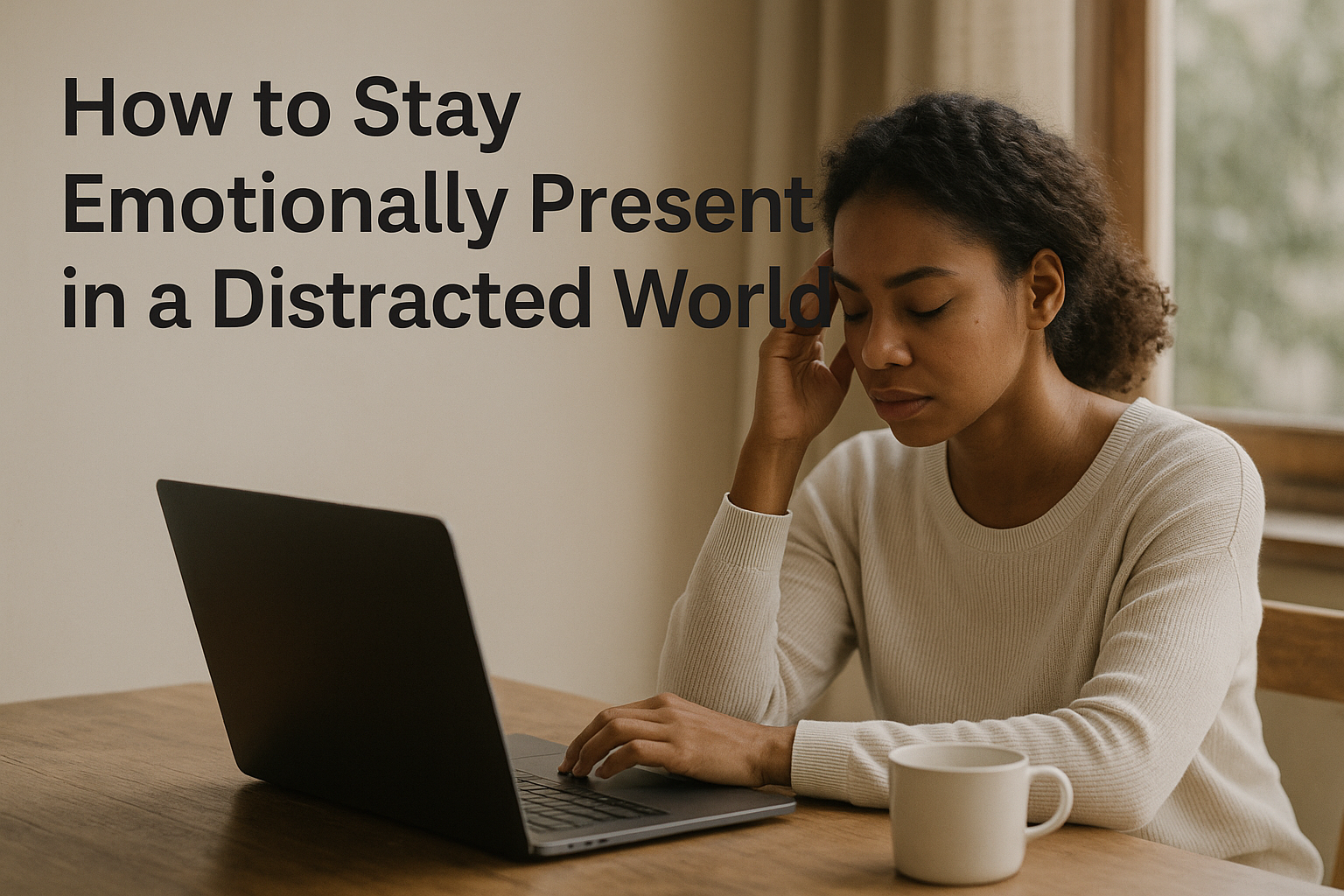
In a world of constant notifications, fast-paced routines, and endless to-do lists, it’s easy to drift away from the present moment — and from yourself. You might find yourself scrolling without thinking, zoning out in conversations, or going through the day on autopilot.
But emotional presence isn’t just a mindfulness buzzword — it’s the foundation of deep connection, self-awareness, and inner peace. When you’re emotionally present, you respond with clarity instead of reacting impulsively. You feel more grounded, more alive, and more in tune with your needs.
Here’s how to cultivate emotional presence, even in a world that’s designed to pull your attention away.
Understand What Emotional Presence Really Means
Being emotionally present means:
- Feeling your emotions as they arise
- Staying connected to your body and breath
- Listening with full attention — to yourself and others
- Slowing down enough to notice what’s true in the moment
- Allowing space between stimulus and response
It’s about choosing to be here — not lost in past regrets or future worries, but rooted in now.
Start With the Body
Your body is your anchor to the present. Emotional presence starts with noticing how you feel physically, then gently tuning in.
Try this:
- Take a slow breath
- Notice any tension or sensation in your body
- Place one hand on your chest or stomach
- Say silently: “I’m here. I feel this.”
Your body is always in the present — your mind just needs help catching up.
Limit Multitasking
Multitasking scatters your attention and disconnects you from what matters. While it may feel productive, it fragments your presence.
Choose one task at a time — even for five minutes. Whether it’s washing dishes, writing an email, or walking down the street, do it with your full awareness. This is how presence becomes a habit.
Practice Mindful Pauses Throughout the Day
You don’t need long meditation sessions to be present. Instead, insert small pauses into your day to reconnect.
Try:
- One deep breath before answering a message
- A 30-second body scan between tasks
- Savoring the first sip of your drink
- Looking out the window and noticing the sky
Presence grows in the moments you choose to pause instead of rush.
Feel Your Feelings in Real Time
When emotions arise, it’s tempting to distract, suppress, or analyze them. But emotional presence means allowing yourself to feel without judgment.
Try this:
- When a feeling surfaces, label it: “I feel anxious” or “I feel disappointed”
- Breathe into the sensation
- Ask: “What is this emotion trying to show me?”
Let the feeling move through, rather than getting stuck inside you.
Be Fully There in Conversations
True connection requires presence. When you’re with someone, give them your full attention. Put your phone away. Make eye contact. Listen not just to reply, but to understand.
You can also ask:
- “How are you, really?”
- “What’s been on your heart lately?”
- “How can I support you right now?”
Presence turns ordinary interactions into meaningful moments.
Unplug Regularly to Reconnect
Technology is one of the biggest distractions from emotional presence. While you may need to stay connected, build intentional breaks into your day.
Try:
- A phone-free morning or evening
- No-screen meals
- A weekly digital detox — even for an hour
- Turning off notifications for non-urgent apps
Use that space to return to yourself.
Create a Grounding Ritual
Having a daily ritual that brings you back to yourself can help you stay emotionally steady.
Ideas:
- Morning journaling to check in with how you feel
- An evening gratitude practice
- A mindful walk with no distractions
- Sitting with your hand on your heart and simply breathing
These rituals remind you that you are allowed to slow down.
Final Thought: Presence Is a Kind of Power
When you are emotionally present, you move through life with more clarity, more intention, and more peace. You don’t get pulled in a hundred directions. You choose how you respond, how you connect, and how you care for yourself.
You don’t have to escape the world to find presence. You just need to return to yourself — breath by breath, moment by moment.