
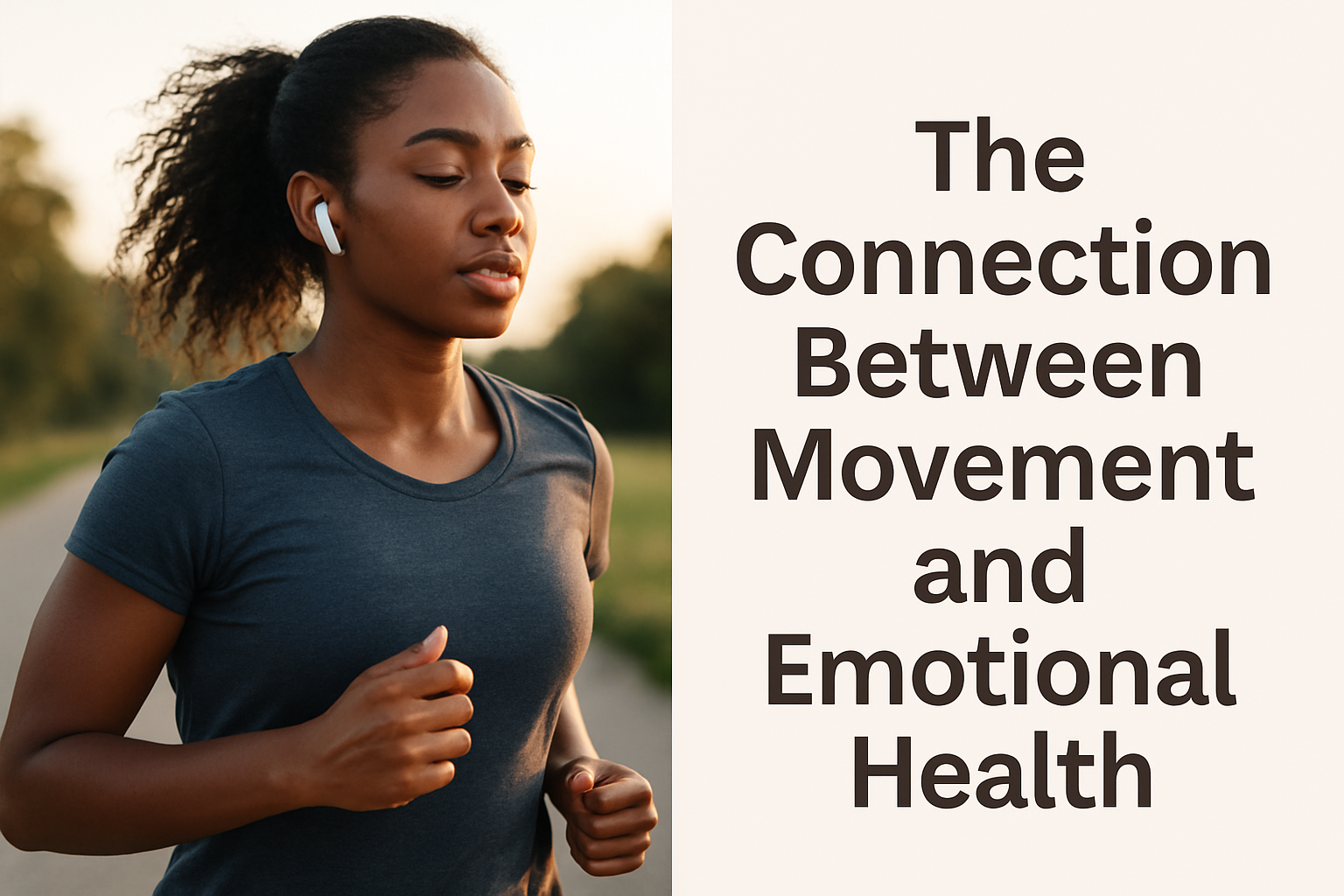
When we think about exercise, we usually focus on its physical benefits — stronger muscles, weight control, cardiovascular health. But movement goes far beyond the body. It’s a powerful tool for emotional well-being, mental clarity, and stress relief.
In fact, moving your body may be one of the most natural and accessible ways to support your mood, reduce anxiety, and build emotional resilience — no gym membership required.
Let’s explore the deep and dynamic connection between movement and emotional health, and how you can use it to feel better every day.
Why Movement Affects Your Emotions
Your mind and body are deeply connected. When you move, you don’t just release physical energy — you also shift emotional energy.
Here’s what happens in your body during movement:
- Endorphins (natural feel-good chemicals) are released, reducing pain and boosting mood
- Serotonin and dopamine, two key neurotransmitters linked to happiness and motivation, increase
- Cortisol (the stress hormone) decreases
- Blood flow improves, bringing more oxygen and nutrients to the brain
All of this contributes to a clearer mind, calmer emotions, and a more grounded sense of self.
Benefits of Movement for Emotional Health
Regular movement — no matter the type — supports your emotional well-being in several key ways:
1. Reduces Anxiety and Stress
When you’re stressed or anxious, your nervous system is in “fight or flight” mode. Movement helps you release that built-up tension and shift into a more balanced, regulated state.
A 10-minute walk, a stretch, or dancing to your favorite song can immediately calm the body and ease the mind.
2. Lifts Mood and Fights Depression
Exercise is often referred to as nature’s antidepressant. It doesn’t just distract you from negative thoughts — it actively boosts mood-related brain chemicals.
Studies show that regular physical activity can reduce symptoms of mild to moderate depression and prevent future relapses.
3. Builds Emotional Resilience
When you move your body regularly, you build confidence, discipline, and self-efficacy — all important ingredients for emotional resilience.
You also learn to stay with discomfort (like during a tough workout), which mirrors the mental strength needed to navigate life’s emotional ups and downs.
4. Improves Sleep and Energy
Sleep is essential for emotional health. And movement helps you fall asleep faster, sleep more deeply, and wake up feeling more rested.
Plus, even light activity can fight fatigue and give you a natural energy boost — especially when you feel mentally foggy.
5. Enhances Mindfulness and Presence
Certain types of movement — like yoga, walking, or tai chi — encourage mind-body awareness. They help you tune into your breath, body sensations, and thoughts without judgment.
This type of mindful movement creates space for emotional processing and reflection.
You Don’t Need Intense Workouts to Feel the Benefits
You don’t need to run marathons or hit the gym daily. The emotional benefits of movement are available through any type of physical activity, especially when it’s consistent and enjoyable.
Here are some ideas:
- Walking outdoors
- Dancing in your living room
- Gentle yoga or stretching
- Gardening
- Cleaning with music on
- Swimming or biking
- Playing with your kids or pets
- Rebounding on a mini trampoline
- Tai chi or mindful movement classes
The goal isn’t intensity — it’s connection. Choose what feels good for your body and soul.
How to Use Movement for Emotional Support
If you’re feeling anxious, sad, overwhelmed, or disconnected, here are simple ways to move through the emotion:
🌿 Feeling anxious?
Try slow, repetitive movement like walking, yoga, or rocking side to side. Pair it with deep breathing.
🌿 Feeling sad?
Move gently but steadily. Stretch. Go for a walk while listening to calming music. Let your body release the weight.
🌿 Feeling restless?
Do something energizing: dance, jump, jog in place. Use movement to release pent-up energy and tension.
🌿 Feeling numb or disconnected?
Start small: shake your hands, sway, tap your feet. Movement helps you reconnect to your body and presence.
Create a Daily Movement Ritual
You don’t have to schedule long workouts — just sprinkle movement throughout your day.
Try this:
- Stretch while your coffee brews
- Do a few squats or lunges during TV commercials
- Take a 10-minute walk after lunch
- Dance to one song before you start work
- Set reminders to stand and stretch every hour
Make movement feel like a gift — not a chore.
Final Thought: Move Your Body, Free Your Mind
Your body holds so much wisdom — and so many emotions. When you move with intention, you unlock that wisdom and create space for healing, clarity, and joy.
Whether it’s a walk around the block or a deep yoga flow, let movement become your emotional release valve — a way to regulate, recharge, and return to yourself.
Because sometimes, the most powerful way to change how you feel…
Is to move.