
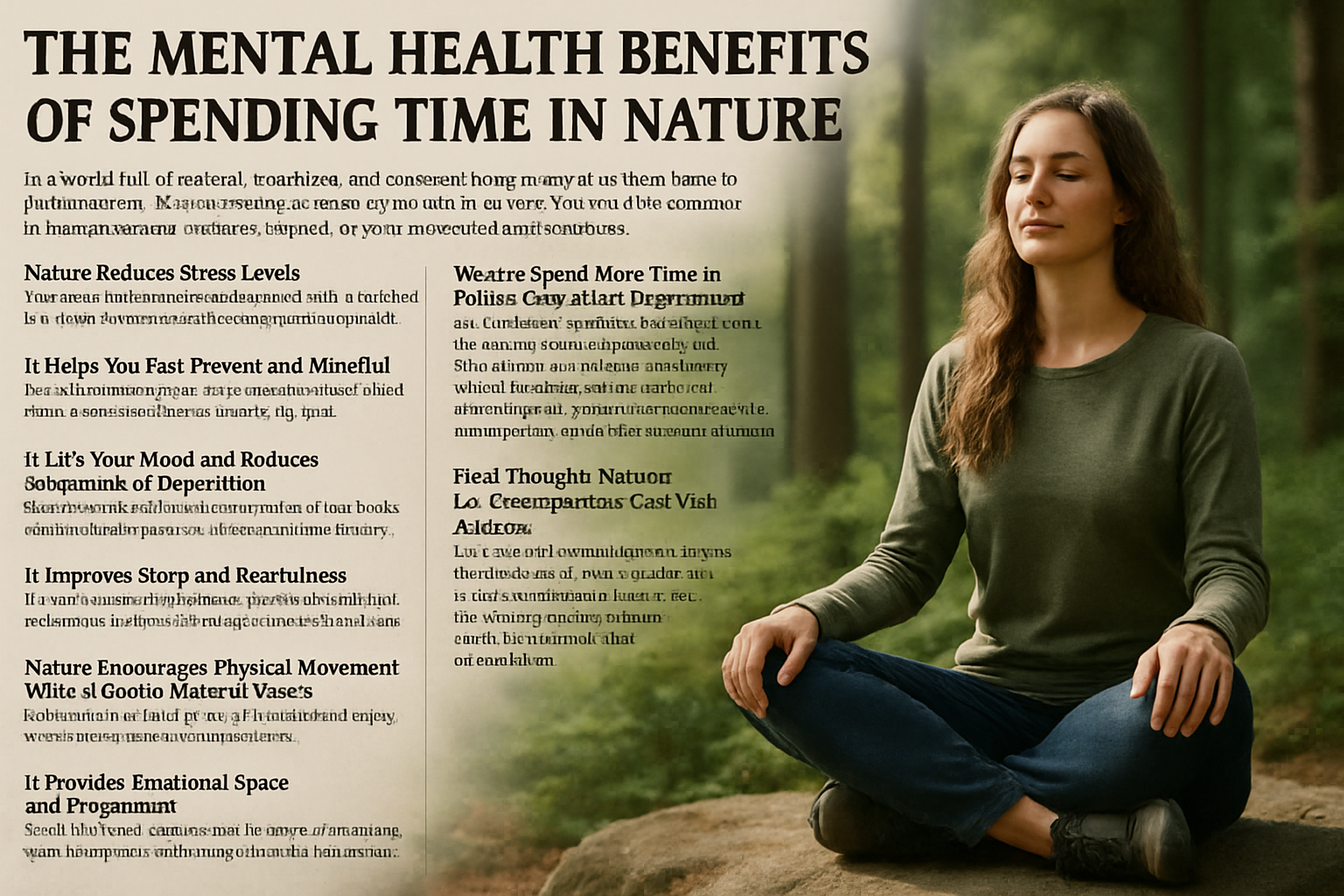
In a world full of screens, deadlines, and constant noise, many of us have become disconnected from something simple and powerful: nature. Yet just a few minutes outdoors can have a measurable impact on your mental health. Whether it’s a walk in the park, sitting by a tree, or hiking a trail, spending time in nature isn’t just relaxing — it’s therapeutic.
Science continues to show what many cultures have always known: nature helps regulate the mind, heal the heart, and restore emotional balance. This article explores how and why reconnecting with the natural world can improve your mental well-being.
Nature Reduces Stress Levels
One of the most well-documented benefits of being in nature is its ability to reduce cortisol, the body’s main stress hormone. Even a short walk in a natural setting can calm the nervous system and lower physical tension.
You don’t need a deep forest — a local park, garden, or tree-lined street can have a calming effect. Being surrounded by greenery and natural sounds helps your brain shift from a reactive, stressed state to a more relaxed, grounded one.
It Helps You Feel Present and Mindful
Nature has a way of pulling you into the present moment. When you’re outdoors, your senses awaken. You notice textures, colors, temperatures, sounds, and smells.
This natural mindfulness improves mental clarity, reduces overthinking, and helps quiet anxious thoughts. It offers a break from mental loops and digital distraction. You become more aware of your surroundings — and yourself.
Try this: next time you’re outside, pause and observe one thing with each of your five senses. Let that moment anchor you in the now.
It Lifts Your Mood and Reduces Symptoms of Depression
Natural settings are known to increase the production of serotonin, a neurotransmitter responsible for mood regulation. Studies show that people who spend regular time in green spaces report less anxiety, lower rates of depression, and improved emotional well-being.
Sunlight, fresh air, and physical movement all contribute to this boost. Walking outdoors for even 20–30 minutes a few times a week can offer significant mood improvements.
It Improves Sleep and Restfulness
Exposure to natural light — especially in the morning — helps reset your circadian rhythm, the internal clock that controls your sleep-wake cycle.
Spending time outside helps your body know when it’s time to be awake and alert, and when it’s time to wind down. As a result, people who spend time in nature often fall asleep faster and sleep more deeply.
Try to get at least 10–15 minutes of sunlight within an hour of waking up — it signals your brain that the day has started and improves energy, focus, and sleep quality later.
Nature Encourages Physical Movement (Which Boosts Mental Health)
Being outdoors naturally invites movement — even light activity like walking, stretching, or climbing a hill. Physical movement, especially when paired with fresh air and sunlight, increases endorphins, reduces fatigue, and sharpens mental focus.
You don’t need intense exercise. Gentle, consistent movement in a natural setting is more than enough to benefit your mind and body.
It Boosts Creativity and Problem Solving
When you step away from routine, noise, and screen time, your brain has space to rest and reset. Nature has been shown to improve creative thinking and problem-solving ability — especially after long periods of mental fatigue.
If you’re stuck in a mental rut, feeling uninspired, or overwhelmed with decision fatigue, a walk outside might offer the clarity you’re looking for.
It Provides Emotional Space and Perspective
Nature helps you zoom out. Watching the ocean, standing near mountains, walking under trees — it reminds you that life is bigger than your inbox or to-do list.
This shift in perspective reduces rumination — the tendency to overanalyze problems — and helps you reconnect with what truly matters.
Time in nature can be especially helpful when you’re navigating:
- Grief or loss
- Burnout
- Relationship stress
- Life transitions
- Anxiety or depression
You don’t have to “do” anything — just be in the space, and let the natural world support your healing.
Ways to Spend More Time in Nature (Even With a Busy Schedule)
You don’t need a full day in the forest to feel the benefits. Try integrating nature into your existing routine:
- Take your morning coffee outside
- Go for a 10-minute walk on your lunch break
- Sit on the grass and leave your phone behind
- Tend to houseplants or a small garden
- Eat one meal a day outdoors, if possible
- Watch the sky, clouds, or sunset each evening
- Open your windows and listen to birds or rain
Make it easy, enjoyable, and pressure-free.
Final Thought: Nature Is a Therapist You Can Visit Anytime
You don’t need an appointment. You don’t need to explain yourself. You just need to step outside and allow yourself to connect — with the air, the sky, the trees, and your own breath.
Nature doesn’t ask you to be productive or perfect. It simply offers peace.
So when the world feels too loud, your thoughts too heavy, or your emotions too much…
Go outside. Let the earth hold you. Let the wind clear your mind. Let the sun remind you that you are alive.